State-Backed or Privately Owned? Why the Distinction Matters More Than You Think When Doing Business in China
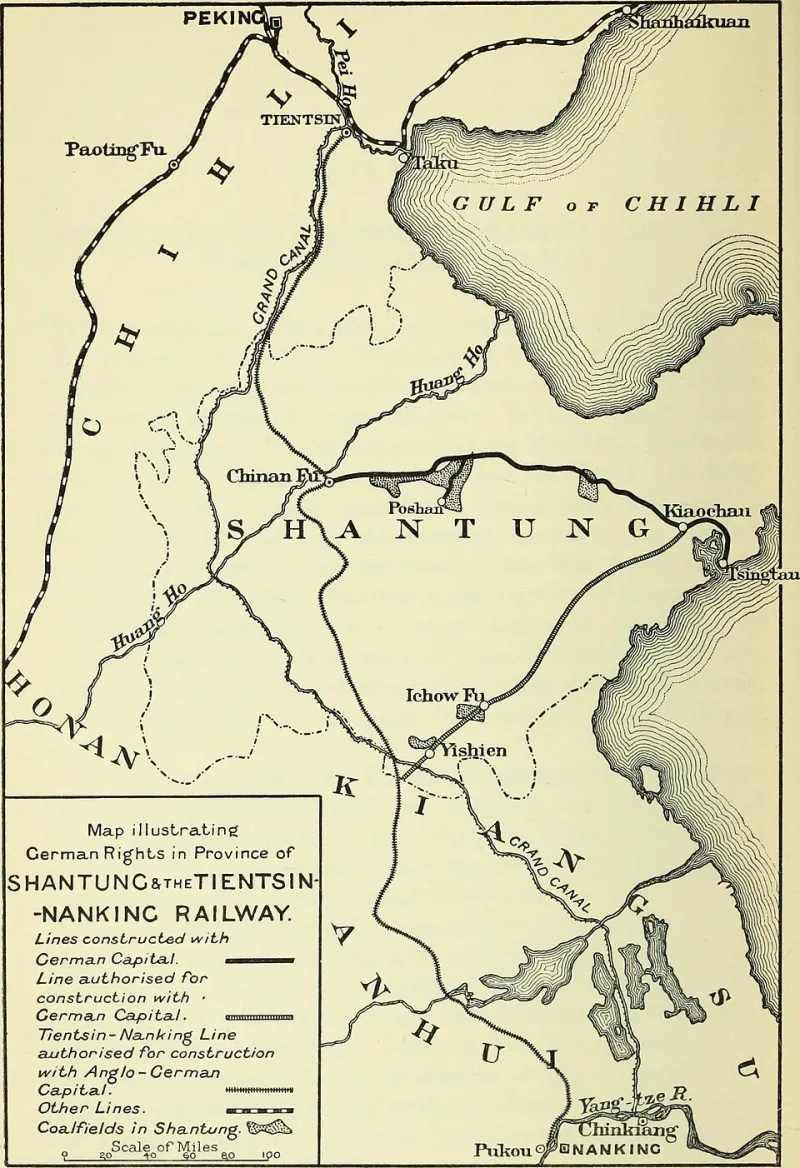
Photo: Kent, Percy Horace Braund, b. 1876, No restrictions, via Wikimedia Commons
When US executives discuss "Chinese competitors" or "Chinese suppliers," they often speak as if the category were monolithic. It is not. The distinction between a state-owned enterprise (SOE) and a privately held Chinese company is not merely a matter of corporate structure — it reflects fundamentally different objectives, capital structures, competitive timelines, and negotiating behaviors. For American businesses operating in international trade, failing to understand this divide is one of the most common and consequential oversights they can make.
China's SOEs — companies in which the central or provincial government holds a controlling stake — collectively represent a significant share of the country's industrial output, particularly in sectors such as energy, telecommunications, infrastructure, banking, and heavy manufacturing. Private enterprises, by contrast, operate under more familiar market-driven incentives, though they too navigate a regulatory environment shaped by state priorities. The two categories can look similar on the surface, especially when both display the same "Made in China" label on a shipping manifest. Beneath the surface, however, they behave in ways that demand entirely different strategic responses from US counterparts.
The Capital Advantage That Changes Every Equation
Perhaps the most consequential structural difference between SOEs and private Chinese firms is the nature of their capital access. State-owned enterprises frequently benefit from preferential lending rates through state-controlled banks, implicit government guarantees that reduce borrowing costs, and in many cases direct government subsidies tied to strategic national objectives. This means an SOE entering a new market — whether in Southeast Asia, Latin America, or the United States — can sustain operating losses for years, or even decades, in ways that no privately capitalized competitor could.
Consider the experience of several US steel and solar manufacturers over the past fifteen years. When Chinese SOEs in these sectors aggressively expanded export capacity, American firms initially attributed the pricing pressure to labor cost arbitrage. Only later did many come to understand that the competitive equation included state-directed capital deployment with return horizons measured in geopolitical timelines rather than quarterly earnings. This is not a complaint about unfair trade so much as it is a structural reality that US businesses must account for in their competitive modeling.
For procurement officers and supply chain managers, this capital dynamic also creates opportunity. SOEs pursuing international market share may offer pricing, payment flexibility, or long-term supply commitments that private firms cannot match — provided the buyer understands the strings that may be attached and structures contracts accordingly.
Strategic Mandates vs. Profit Motives
Private Chinese companies — firms like Alibaba, BYD, or the thousands of smaller manufacturers clustered in Guangdong and Zhejiang provinces — operate primarily under recognizable commercial incentives. They need to generate revenue, manage margins, satisfy shareholders or founders, and adapt to market signals. Negotiating with a private Chinese firm is, in many respects, analogous to negotiating with any growth-oriented business: price, quality, lead times, and relationship equity are the primary levers.
SOEs are different. Many operate under "strategic mandates" — directives from central or provincial government bodies that may prioritize market share acquisition over near-term profitability, technology acquisition over revenue, or geopolitical positioning over conventional business logic. China National Offshore Oil Corporation (CNOOC), State Grid Corporation, and China Communications Construction Company are examples of entities whose international activities cannot be fully understood without reference to China's broader industrial and foreign policy objectives.
This does not mean SOEs are impossible to work with — many US companies have built productive, long-term relationships with state-owned Chinese partners. But it does mean that the negotiation dynamic differs. An SOE counterpart may have less flexibility on pricing than its market position would suggest, because pricing decisions require internal approvals that private firms do not face. Conversely, an SOE may offer infrastructure investment, technology co-development, or market access commitments that no private firm could deliver, precisely because it has the backing of a government balance sheet.
Real-World Scenarios: What US Businesses Have Encountered
A mid-sized US agricultural equipment manufacturer seeking a Chinese distribution partner several years ago found itself in conversations with two potential partners simultaneously: a privately held Shandong-based firm and a provincial SOE with distribution networks across northern China. The private firm moved quickly, offered clear terms, and demonstrated entrepreneurial flexibility in negotiations. The SOE process was slower, involved more stakeholders, and required documentation that the US side initially found excessive. Ultimately, the company split its approach — using the private firm for coastal markets and the SOE for rural provincial distribution, where the latter's government relationships proved decisive in accessing procurement channels.
In the infrastructure and construction sectors, US engineering firms bidding on international projects — particularly in Africa and the Middle East — increasingly find themselves competing against Chinese SOEs that have secured project financing through Chinese state banks as part of the bid. This bundled financing model, common among entities like China Railway Construction Corporation and China State Construction Engineering Corporation, represents a competitive dynamic that has no direct equivalent in US private-sector contracting. American firms that have adapted successfully tend to compete on technical differentiation and local partnership strategies rather than attempting to match the financing leverage that SOEs bring to the table.
How to Structure Your Approach
For US business leaders developing or refining their China strategy, several practical principles apply when engaging with SOEs specifically.
Conduct structural due diligence before entering negotiations. Identify the ownership structure, parent entity, and any government ministry with oversight authority. This information is often publicly available through Chinese corporate registries and is essential context for understanding your counterpart's decision-making process and constraints.
Adjust your timeline expectations. SOE negotiations typically involve more internal approvals and longer decision cycles than private firm negotiations. Building this into your project timeline is not a concession — it is realistic planning.
Understand the strategic mandate. Research what sector objectives the SOE is operating under. If a state-owned entity is expanding aggressively into your market segment, ask whether that expansion is commercially driven or policy-driven. The answer shapes your competitive response and your assessment of whether a partnership is viable.
Engage legal and compliance counsel with specific SOE experience. Contracts with SOEs may carry different enforcement characteristics than those with private firms, particularly in dispute resolution. US counsel with experience in cross-border Chinese commercial law is not a luxury in these engagements — it is a baseline requirement.
Evaluate partnership potential without assuming adversarial positioning. Some of the most durable international commercial relationships US companies have built in China involve SOE partners. The key is entering those relationships with accurate expectations, appropriate legal structures, and a clear understanding of what each party is actually optimizing for.
The Bottom Line
China's commercial landscape is not a single market — it is a complex ecosystem in which state-directed capital, private entrepreneurship, and hybrid structures coexist and compete. US businesses that treat all Chinese counterparts as functionally equivalent are operating with an incomplete map. Those that invest the time to understand the structural differences between state-owned and private enterprises will negotiate more effectively, compete more strategically, and build partnerships that are more durable. In the current global trade environment, that level of market literacy is not a competitive advantage — it is the baseline for informed engagement.