China's Logistics Machine: What US Businesses Must Know About the World's Fastest-Growing Delivery Networks
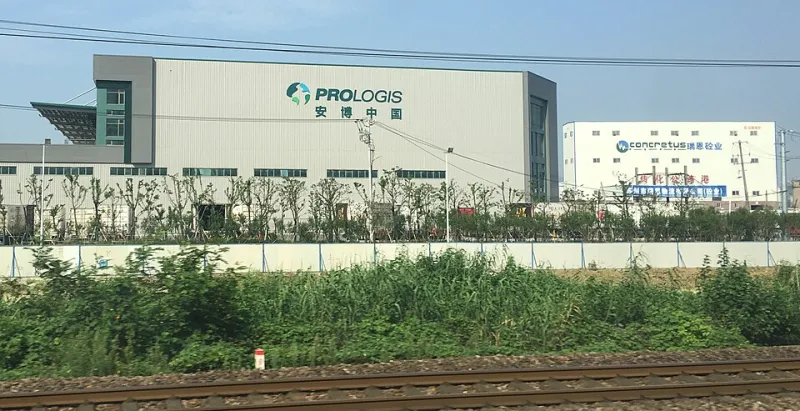
Photo: Bjoertvedt, CC BY-SA 4.0, via Wikimedia Commons
For decades, the conversation about Chinese manufacturing centered on production — factories, labor costs, and component sourcing. Today, a quieter but equally consequential transformation is underway in logistics. Chinese carriers, warehousing firms, and technology-driven fulfillment platforms are building out global delivery infrastructure at a pace that is beginning to reshape how goods move from origin to consumer, often bypassing the legacy systems that US businesses have long relied upon.
This is not a distant trend. It is already influencing delivery timelines, fulfillment costs, and competitive dynamics for American companies operating in e-commerce, retail, and industrial procurement.
The Domestic Foundation That Made Global Expansion Possible
To understand China's outward logistics push, it helps to appreciate the scale of what was built at home. Over the past fifteen years, China constructed one of the most sophisticated domestic parcel networks on earth. Companies like ZTO Express, S.F. Express (SF Holdings), and JD Logistics invested heavily in sorting automation, regional hub infrastructure, and last-mile delivery density. The result is a system capable of processing hundreds of millions of packages daily with transit times that routinely outperform comparable US domestic services in cost efficiency.
This infrastructure was not built for export originally — it was a response to the explosive growth of Chinese domestic e-commerce. But the capabilities developed in that environment, particularly in warehouse automation, route optimization, and technology integration, have proven highly transferable to international markets.
Cross-Border Ambitions: Where Chinese Carriers Are Expanding
S.F. Express has moved aggressively into Southeast Asia, establishing regional hubs and partnering with local carriers to extend its reach beyond Chinese borders. Its international arm, SF International, now offers direct services into the United States, Europe, and parts of the Middle East, positioning itself as an alternative to legacy express carriers for time-sensitive shipments.
ZTO Express, meanwhile, has concentrated on building volume through its partnerships with Chinese cross-border e-commerce platforms, particularly those serving US consumers. As Chinese sellers on platforms like Temu and Shein have scaled their US operations, ZTO and its peers have developed dedicated cross-border lanes that compress transit times and reduce per-unit shipping costs substantially.
Perhaps the most strategically interesting development involves ByteDance's logistics initiatives, which are closely tied to TikTok Shop's e-commerce ambitions. Though still evolving, ByteDance's interest in fulfillment infrastructure reflects a broader pattern: Chinese technology platforms are vertically integrating logistics as a competitive moat, ensuring that their seller ecosystems benefit from proprietary delivery advantages that outside competitors cannot easily replicate.
The Last-Mile Equation for US Importers
For American businesses importing goods from China, the practical implications of this logistics evolution are significant. First, the cost of cross-border fulfillment has dropped considerably for sellers who route through Chinese-operated networks, creating a pricing asymmetry that disadvantages US-based competitors who rely on domestic carriers for their final-mile delivery.
Second, warehouse infrastructure is shifting. Chinese logistics operators are establishing bonded warehouses and fulfillment centers in strategic US locations — particularly near major ports and in states with favorable commercial real estate markets. This allows Chinese sellers to hold inventory closer to American consumers, further reducing delivery timelines and blurring the line between domestic and international commerce.
Third, the technology embedded in these networks is advancing rapidly. Route optimization algorithms, real-time inventory visibility, and AI-driven demand forecasting are standard features in the leading Chinese logistics platforms — capabilities that smaller US-based third-party logistics providers often struggle to match at comparable price points.
Strategic Options for US Companies
American businesses face a genuine strategic choice in how they respond to China's logistics ascendancy. Three broad approaches are worth considering.
Leverage the networks directly. US importers and e-commerce operators can negotiate access to Chinese logistics platforms as a cost-reduction strategy. For companies that source heavily from China and sell through digital channels, routing fulfillment through established Chinese carriers for the international leg of the journey — before handing off to domestic partners — can meaningfully reduce landed costs.
Build resilience through diversification. Companies that are concerned about supply chain concentration or geopolitical risk should audit their current logistics dependencies and identify alternative routing options. Southeast Asian logistics networks, in particular, are maturing rapidly and may offer viable alternatives for certain product categories.
Compete on service differentiation. US logistics providers and retailers that cannot match Chinese operators on price alone can compete on reliability, returns management, customer service, and compliance with domestic regulatory standards — areas where American companies often hold structural advantages.
Regulatory and Compliance Considerations
No discussion of Chinese logistics expansion into the US market is complete without acknowledging the regulatory environment. The recent debate over the de minimis trade exemption — which allows packages valued under $800 to enter the United States duty-free — has drawn significant scrutiny from lawmakers who argue it creates an uneven playing field for domestic retailers. Any changes to this policy would directly affect the economics of Chinese cross-border e-commerce and, by extension, the logistics networks built to support it.
US businesses should monitor these regulatory developments closely. A tightening of de minimis rules, or the imposition of new customs requirements on low-value parcels, could alter competitive dynamics considerably and create both risks and opportunities depending on a company's current positioning.
A Network Worth Understanding
China's logistics machine is no longer a back-office concern for trade specialists alone. It is a front-line competitive factor for any US business engaged in international commerce, e-commerce fulfillment, or consumer goods sourcing. Whether the strategic response is partnership, adaptation, or direct competition, the first step is the same: understand the network, its capabilities, and its trajectory. The companies that do will be far better positioned to navigate the next chapter of global trade.