Who Controls the Ports Controls the Trade: China's Global Infrastructure Expansion and What It Means for US Importers
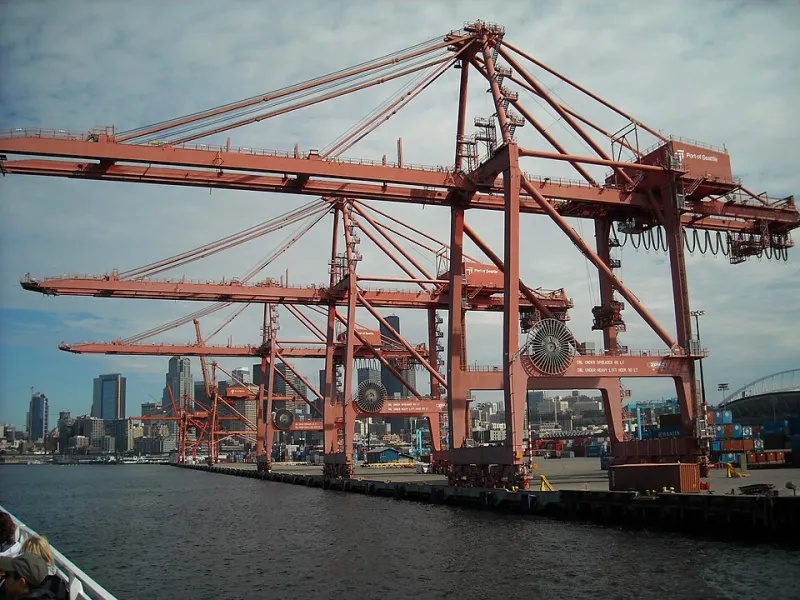
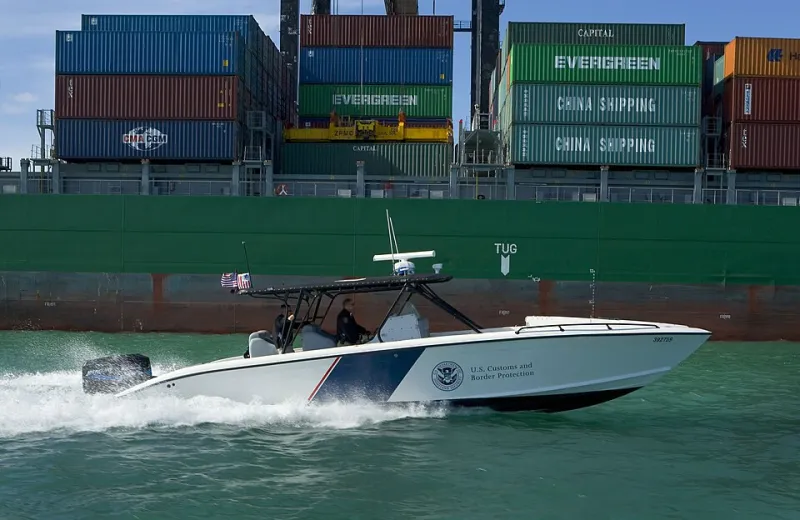
Photo: Daniel Ramirez from Honolulu, USA, CC BY 2.0, via Wikimedia Commons
For decades, the conversation around global supply chains focused on manufacturing costs, labor arbitrage, and raw material access. Today, a quieter but equally consequential competition is playing out at the world's ports — and Chinese operators are winning significant ground.
Chinese state-owned enterprises (SOEs) such as COSCO Shipping Ports and China Merchants Port Holdings, alongside private logistics conglomerates, have spent the better part of two decades acquiring stakes, building terminals, and signing concession agreements at strategic chokepoints across Asia, Africa, the Middle East, and Latin America. The cumulative effect is a logistics infrastructure web that increasingly touches nearly every major trade corridor used by US importers and exporters.
The Scale of the Buildout
The numbers are striking. China Merchants Port Holdings currently holds stakes or operating rights in more than 50 port projects across six continents. COSCO Shipping Ports operates terminals from Rotterdam to Piraeus to the Port of Long Beach — the latter a relationship that drew significant scrutiny from US regulators. Meanwhile, smaller but fast-growing Chinese operators are securing footholds in emerging markets where port infrastructure has historically been underdeveloped.
In sub-Saharan Africa, Chinese-financed and Chinese-operated port projects now dot the coastlines of Kenya, Tanzania, Djibouti, and Nigeria. In Latin America, terminal investments in Peru, Chile, and Brazil have given Chinese operators direct access to South American commodity flows. Across Southeast Asia — a region of enormous strategic importance to US supply chain diversification efforts — Chinese port interests are well established in countries including Malaysia, Sri Lanka, and Myanmar.
This is not purely a commercial exercise. Many of these projects are financed through Chinese policy banks under the framework of the Belt and Road Initiative (BRI), blending infrastructure development with long-term strategic positioning.
What This Means for US Companies
For American importers and exporters, the practical implications are layered and sometimes contradictory.
On one hand, Chinese-operated ports have in many cases delivered genuine efficiency improvements. The terminals managed by COSCO and China Merchants tend to be well-capitalized, technologically capable, and operationally integrated with Chinese shipping lines — meaning that cargo moving along China-anchored trade routes can benefit from streamlined handling and reduced dwell times.
On the other hand, US companies operating in sectors sensitive to national security considerations — semiconductors, defense supply chains, critical minerals — face a more complex calculus. When a significant share of the world's container throughput passes through terminals with Chinese operational involvement, questions arise about data access, cargo visibility, and potential leverage in moments of geopolitical tension.
The Biden and Trump administrations have both flagged concerns about Chinese port equipment manufacturers, most notably ZPMC, which supplies the majority of ship-to-shore cranes operating at American ports. That scrutiny reflects a broader anxiety: infrastructure dependency can translate into strategic vulnerability.
Rerouting Risk: Practical Guidance for US Importers
None of this means that US companies should reflexively avoid any port with Chinese involvement — that would be both impractical and commercially counterproductive. But it does argue for a more deliberate approach to supply chain mapping.
Know your tier-two logistics exposure. Most US importers have good visibility into their direct shipping arrangements, but fewer have mapped the intermediate port calls and transshipment hubs their cargo passes through. A shipment that originates in Vietnam and arrives in Los Angeles may pass through a Chinese-operated terminal in Malaysia or Sri Lanka along the way. Understanding that exposure is the first step toward managing it.
Diversify carrier and routing relationships where feasible. The concentration of global container shipping among a small number of alliances — several of which include Chinese carriers — means that true diversification is difficult but not impossible. US importers with sufficient volume should evaluate whether alternative routing through non-Chinese-operated hubs adds meaningful resilience, even at modest additional cost.
Engage freight forwarders with geopolitical literacy. Not all logistics providers are equally equipped to advise clients on the geopolitical dimensions of routing decisions. Companies sourcing from or shipping to China should work with forwarders who understand the strategic context, not just the rate sheets.
Monitor regulatory developments closely. The US government's posture toward Chinese port equipment and operators is evolving rapidly. The Committee on Foreign Investment in the United States (CFIUS) and the Department of Homeland Security have both expanded their scrutiny of port-related infrastructure. Companies with significant logistics exposure should maintain awareness of regulatory changes that could affect their operations.
The Competitive Reality
It would be a mistake to frame China's port expansion purely as a threat. For US companies with no particular national security exposure, Chinese-operated terminals in Africa or Latin America may simply represent the most efficient way to move goods. In markets where alternative port infrastructure is inadequate or unreliable, Chinese-built and Chinese-operated facilities may be the only viable option.
The more useful framing for most US business professionals is this: Chinese port operators have built a logistics network that reflects China's long-term trade strategy. That strategy prioritizes reliability and connectivity for Chinese commercial interests — which frequently aligns with the interests of foreign companies using the same infrastructure, and occasionally diverges from them.
Navigating that alignment-and-divergence dynamic is increasingly central to sophisticated supply chain strategy. US importers who understand the geography of Chinese port influence — where it operates, how it intersects with their own trade routes, and where it creates both opportunity and risk — will be better positioned than those who treat logistics as a commodity function.
Looking Ahead
The buildout is not slowing. Chinese port operators continue to pursue new concessions and partnerships, particularly in markets that Western infrastructure investors have been slow to enter. For US companies, the window to develop informed, proactive supply chain strategies around this reality is open — but it will not remain open indefinitely.
The ports are being built. The routes are being shaped. The question for American businesses is whether they understand the map well enough to navigate it on their own terms.