Incentive Maps and Industrial Parks: The Quiet Rise of China's Second-Tier Manufacturing Hubs
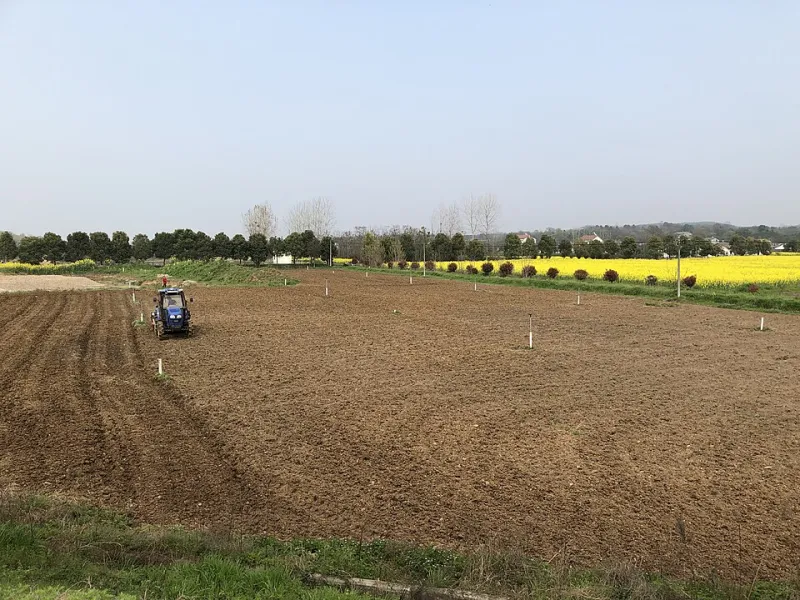
Photo: Fxqf, CC BY-SA 4.0, via Wikimedia Commons
Ask a US sourcing manager to name their company's Chinese manufacturing footprint, and the answers rarely stray far from the established map: the Pearl River Delta, the Yangtze corridor around Shanghai, maybe Ningbo for port access. That map, however, is increasingly out of date. Across central and western China, second- and third-tier municipalities are competing hard for foreign-invested manufacturing capacity — and in several respects, they are winning.
Why the Interior Cities Are Competing So Aggressively
The motivation on the Chinese side is straightforward. Coastal industrial zones have grown expensive: land in established Shenzhen districts can cost multiples of comparable parcels in inland provinces, while labor costs in Guangdong routinely run 30 to 50 percent above those in cities like Zhengzhou or Chongqing. Local governments in the interior, eager to replace lost low-end manufacturing and absorb returning workers, have turned themselves into aggressive economic development shops — in ways that would feel familiar to any executive who has negotiated with a US state economic development office.
The results are tangible. Municipalities such as Hefei in Anhui province have become case studies in state-coordinated industrial strategy, bundling land, equity participation, and infrastructure into packages that private landlords on the coast simply cannot match. Chengdu has leveraged its position as a western logistics hub, including direct rail freight connections to Europe, to attract electronics and automotive supply chains. Nanning, gateway to ASEAN markets, is positioning itself for companies hedging between Chinese production and Vietnamese alternatives.
What the Packages Actually Look Like
Incentive structures vary, but the common elements are consistent enough to generalize:
- Land and facility costs. Industrial land in tier-two cities is frequently offered at steep discounts to coastal benchmarks, sometimes with build-to-suit factory space available on favorable lease terms.
- Tax arrangements. Beyond national incentives, local governments often rebate a portion of locally retained taxes — typically value-added tax and income tax portions — for a defined period, usually five to ten years.
- Labor subsidies and training. Hiring grants, vocational partnerships with local universities, and wage subsidies for qualified engineers are common in cities trying to build specific industry clusters.
- Administrative fast-tracking. Dedicated foreign investment service bureaus can compress licensing and environmental approvals from months to weeks — a real difference from the slower, more contested processes in saturated coastal zones.
A US buyer establishing a dedicated production line might find that the all-in cost of an inland operation runs 15 to 25 percent below an equivalent coastal arrangement once these elements are combined.
When the Second City Makes Sense — and When It Doesn't
The calculus is not universally favorable, and honest analysis requires acknowledging the frictions. Inland locations mean longer drayage to deep-water ports, which matters enormously for US-bound container freight. A factory in Hefei may add several days and meaningful per-container cost to a Los Angeles-bound shipment compared with a Shenzhen competitor. Companies shipping heavy or time-sensitive goods should model this carefully rather than accept headline savings.
Supplier ecosystems also matter. The clustering advantage of the Pearl River Delta — where a buyer can source components, tooling, and packaging within a two-hour radius — is genuine and difficult to replicate. A municipality may offer attractive terms for final assembly while the upstream supply chain still sits a thousand kilometers away.
That said, the second-city option fits well in specific scenarios:
- Labor-intensive products where wage differences dominate landed cost.
- Domestic-China-oriented production, where inland proximity to Chinese consumers outweighs export logistics.
- Companies planning multi-year commitments, where tax rebates and land deals compound into substantial savings.
- Buyers seeking negotiating leverage, for whom a credible alternative location strengthens their hand with existing coastal suppliers.
Due Diligence in a Newer Market
Working in a tier-two municipality also changes the diligence picture. Local government relationships carry more weight in smaller cities, and the distinction between private and state-affiliated enterprises — a theme we have examined before — can be blurrier. US companies should verify the legal enforceability of incentive agreements, since local commitments made by one administration are not always honored by the next. Written agreements with clear dispute resolution provisions, ideally arbitration in Hong Kong or Singapore, remain essential.
The broader point for US sourcing professionals is that China's manufacturing geography is not static. The familiar coastal map was drawn in an era of cheap labor and cheap land that no longer exists. The municipalities now courting American business with genuine seriousness — Hefei, Chengdu, Nanning, Zhengzhou, and others — represent a structural shift, not a promotional blip. Buyers who update their maps early tend to be the ones who set the terms everyone else later accepts.