Legal First, Sales Second: Why Smart US Companies Are Building China Compliance Teams Before Day One

Photo: US business professionals reviewing legal documents China compliance office, via cdn.prod.website-files.com
For decades, the dominant playbook for US companies entering China followed a familiar arc: identify market opportunity, hire a country manager, build a sales team, and figure out the regulatory details along the way. That approach worked tolerably well when enforcement was inconsistent and the cost of non-compliance was manageable. Neither condition holds true today.
China's regulatory environment has grown substantially more sophisticated over the past five years, and enforcement—particularly around data privacy, labor law, and foreign business licensing—has become markedly more rigorous. The companies absorbing those lessons most painfully are not fringe operators; they are mid-sized American firms with genuine market ambitions and insufficient legal preparation.
The Compliance Landscape Has Fundamentally Shifted
The passage of China's Personal Information Protection Law (PIPL) in 2021, its Data Security Law the same year, and the ongoing evolution of cross-border data transfer regulations have collectively transformed the compliance calculus for foreign businesses. Where a US company once needed to understand basic corporate registration requirements and import licensing, it must now navigate a layered framework that touches data localization, cybersecurity assessments, sector-specific foreign investment restrictions, and employment law—often simultaneously.
Labor compliance alone presents a formidable challenge. China's Labor Contract Law mandates written contracts within 30 days of employment commencement, carries strict limitations on probationary periods, and imposes significant penalties for improper termination. Social insurance contributions—covering pension, medical, unemployment, work injury, and maternity benefits—are legally required and vary by municipality. American HR departments accustomed to at-will employment frameworks frequently underestimate these obligations until a dispute surfaces.
The foreign investment dimension adds further complexity. China's Negative List system designates sectors where foreign participation is restricted or prohibited outright, but the nuances within permitted categories are considerable. A US company that clears the threshold for market entry may still find that specific business activities require additional approvals, joint venture structures, or variable interest entity arrangements that carry their own legal and operational risks.
What Costly Mistakes Actually Look Like
The case files of China-focused legal practitioners reveal patterns that repeat with uncomfortable regularity. One recurring scenario involves US technology firms that begin hiring Chinese employees through informal arrangements—sometimes via professional employer organizations—before establishing a legally registered entity. When local authorities scrutinize these arrangements, the resulting back taxes, penalties, and mandatory restructuring can dwarf the savings the company imagined it was capturing.
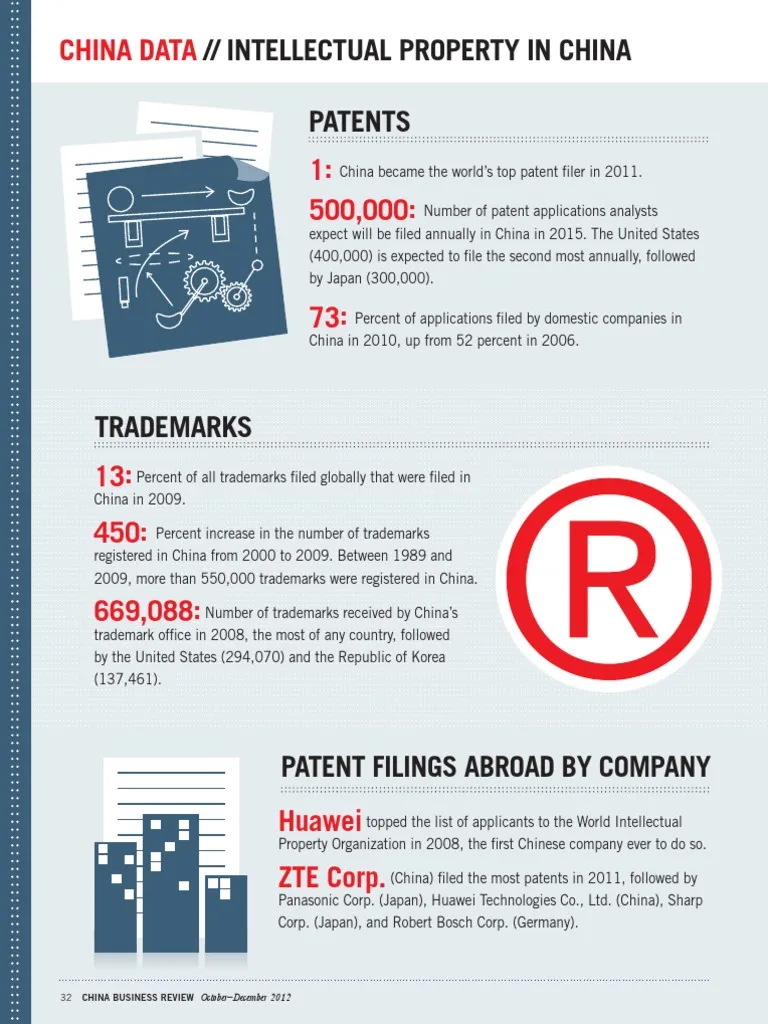
Another common failure point involves intellectual property registration sequencing. US companies that launch operations in China before registering trademarks domestically frequently discover that their brand names have been pre-emptively filed by third parties. China operates a first-to-file trademark system, not a first-to-use system, and the distinction matters enormously. Recovering a brand in this context is both expensive and uncertain.
Data handling violations represent a newer but rapidly growing category of compliance exposure. Several US firms operating Chinese subsidiaries have faced regulatory scrutiny after routine data transfers to US-based parent companies triggered cross-border data flow restrictions. The fines in isolation may not be catastrophic, but the operational disruption—and the reputational signal sent to Chinese customers and partners—can set market entry efforts back by years.
The Rise of the Boutique China Law Firm
Against this backdrop, a distinct segment of the legal industry has grown considerably: boutique firms staffed by practitioners who combine formal legal training in both US and Chinese law with genuine on-the-ground operational experience. These are not generalist international law firms with a China desk. They are specialists who can speak fluently to a US CFO about risk tolerance while simultaneously navigating the procedural requirements of a municipal market supervision bureau in Shenzhen or Chengdu.
Demand for these services has accelerated as larger law firms have sometimes struggled to offer the responsiveness and cost structure that middle-market US companies require. A manufacturer in Ohio or a software company in Austin entering China for the first time does not need a white-shoe firm billing at New York rates for every compliance question. It needs experienced counsel that can build pragmatic, cost-calibrated compliance frameworks without sacrificing rigor.
Some of these boutique practices have also developed strong relationships with local Chinese law firms—a critical asset given that certain legal work in China must be performed by licensed Chinese attorneys. The ability to coordinate seamlessly across that boundary, without friction or information loss, has become a meaningful differentiator.
Building Compliance Infrastructure from Day One: A Practical Framework
For US companies at the planning stage of a China market entry, compliance professionals consistently identify several foundational priorities.
Entity structure decisions should precede all hiring. The choice between a Wholly Foreign-Owned Enterprise, a joint venture, or a Representative Office carries downstream implications for what business activities are legally permissible, how profits can be repatriated, and what employment obligations apply. Getting this decision right at the outset is substantially less expensive than restructuring later.
Data mapping must happen before systems are deployed. US companies should conduct a thorough audit of what data will be collected from Chinese users or employees, where it will be stored, and whether any cross-border transfers are contemplated. This analysis should inform technology architecture decisions before those systems are built—retrofitting compliance into existing infrastructure is significantly more costly.
Employment contracts and HR policies require localization, not translation. Adapting a US employee handbook for Chinese use is not a linguistic exercise; it is a legal one. Provisions that are standard in American employment agreements may be unenforceable or actively non-compliant under Chinese labor law. Local counsel should review and redraft these documents, not merely translate them.
Compliance training should be treated as an ongoing operational function. China's regulatory environment is not static. Companies that build compliance awareness into their Chinese operations from the start—and that treat regulatory updates as material business intelligence—are considerably better positioned than those that approach compliance as a one-time setup cost.
The Strategic Case for Getting This Right
The companies that have navigated China market entry most successfully share a common trait: they treated legal and compliance infrastructure as a strategic investment rather than an administrative burden. That framing matters because it changes how resources are allocated and how leadership prioritizes competing demands during the inevitably chaotic early stages of a new market launch.
China remains one of the world's most consequential commercial opportunities for US businesses across a wide range of sectors. The regulatory complexity that surrounds that opportunity is real, but it is navigable. The firms that will capture durable value in that market are the ones that build the compliance foundation first—and let everything else follow from it.