The Green Supply Chain Reality: How China's Dominance in Solar, Batteries, and EV Components Shapes US Energy Strategy
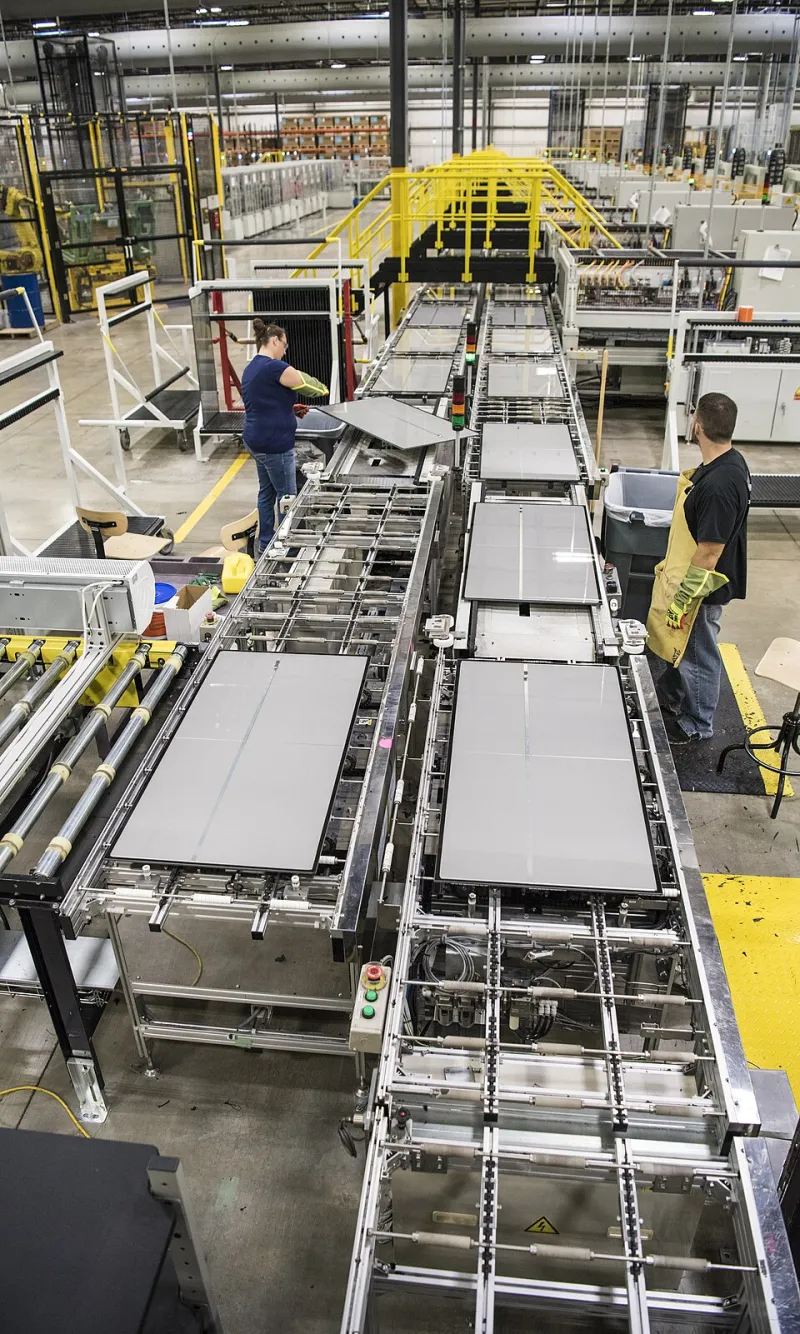
Photo: U.S. Department of Energy, Public domain, via Wikimedia Commons
The energy transition is often discussed in terms of technology breakthroughs, policy incentives, and consumer adoption curves. Less frequently examined — but arguably more consequential for US businesses — is the underlying supply chain architecture that makes renewable energy possible. At nearly every critical link in that chain, Chinese firms occupy a dominant position. This is not a temporary condition born of a single policy decision or a lucky market moment. It is the result of sustained, deliberate industrial investment over more than two decades, and it presents American companies with one of the most complex strategic environments in modern commerce.
Mapping the Concentration
The numbers tell a striking story. China currently accounts for roughly 80 percent of global solar panel manufacturing capacity, with that figure rising even higher when measured at the polysilicon and wafer stages that precede panel assembly. In lithium-ion batteries, Chinese firms — most notably CATL and BYD — command a combined global market share that dwarfs their nearest competitors. When it comes to the processed minerals that flow into those batteries, including lithium, cobalt, and rare earth elements, Chinese companies control significant portions of both mining operations and, critically, the refining capacity that transforms raw ore into battery-grade materials.
Electric vehicle components present a similar picture. Chinese suppliers have become essential participants in global EV supply chains, providing motors, power electronics, thermal management systems, and structural components to automakers operating across multiple continents.
For US companies in energy, automotive, utilities, and manufacturing, this concentration is not an abstraction — it is a procurement reality that shapes cost structures, lead times, and strategic risk profiles.
The Policy Landscape Complicating Simple Solutions
Understanding China's green energy dominance requires equal attention to the US policy environment, which has grown considerably more complex in recent years. The Inflation Reduction Act introduced substantial incentives for domestically produced clean energy equipment and vehicles, explicitly designed to encourage investment in American manufacturing. Simultaneously, tariffs and trade restrictions — including those targeting solar panels from certain Chinese suppliers and expanded scrutiny of battery supply chains — have raised the cost of direct sourcing from Chinese manufacturers for some product categories.
The Uyghur Forced Labor Prevention Act has added another layer of compliance complexity, requiring US importers to demonstrate that goods from Xinjiang — a major polysilicon production region — were not made with forced labor. For solar developers and energy companies, navigating these requirements while maintaining project economics has become a significant operational challenge.
This policy environment does not eliminate the role of Chinese supply chains in US energy markets. It does, however, force companies to be far more deliberate about how they engage with those supply chains, and it creates meaningful variation in risk exposure across different product categories and sourcing strategies.
Partnership Models Worth Examining
Despite the geopolitical friction, business relationships between US and Chinese clean energy companies continue to evolve. Several models have emerged that allow American firms to access Chinese manufacturing expertise and cost advantages while managing regulatory and reputational risk.
Joint ventures and technology licensing arrangements remain active, particularly in battery chemistry and manufacturing process technology. Some US energy storage companies have established structured partnerships with Chinese cell manufacturers that allow them to incorporate Chinese-produced cells into domestically assembled systems — a configuration that can qualify for certain IRA incentives while leveraging established Chinese manufacturing scale.
Third-country manufacturing has also gained traction. Chinese firms have established solar and battery production facilities in Southeast Asia, the Middle East, and increasingly in Europe, creating supply chain pathways that may satisfy origin requirements for US market access while still drawing on Chinese technical expertise and management systems.
For US companies evaluating these arrangements, due diligence must extend beyond standard commercial considerations to include supply chain traceability, regulatory compliance verification, and an honest assessment of how the partnership might be perceived by customers, investors, and regulators.
Competitive Threats That Demand Honest Assessment
Beyond supply chain sourcing, US companies in clean energy manufacturing face direct competitive pressure from Chinese firms entering American and global markets. BYD's ambitions in commercial electric vehicles — buses, trucks, and fleet applications — are well documented, and the company has demonstrated a willingness to price aggressively in markets where it seeks to build share. Chinese solar developers are similarly active in project development markets outside China, competing for contracts that US and European firms have traditionally dominated.
American companies that dismiss this competitive pressure as a future concern rather than a present one may find themselves poorly positioned as market dynamics shift. The relevant question is not whether Chinese firms will be formidable competitors in clean energy — they already are — but rather where US companies can build durable competitive advantages that are not easily eroded by cost competition alone.
Areas of genuine US strength include project development and financing expertise, grid integration capabilities, regulatory navigation in complex domestic markets, and service and maintenance relationships with enterprise customers who prioritize reliability and accountability over upfront cost.
Positioning for the Long Term
For US business leaders, the strategic imperative in green energy supply chains is clarity — clarity about where the dependencies lie, where the risks are concentrated, and where genuine competitive differentiation is achievable.
Companies that rely heavily on Chinese-sourced components should conduct rigorous supply chain audits and develop contingency sourcing strategies, even if those alternatives carry higher near-term costs. The value of supply chain resilience has been demonstrated repeatedly in recent years, and the clean energy sector is not exempt from disruption risk.
At the same time, reflexive decoupling is not a viable strategy for most businesses. The cost and capability advantages embedded in Chinese green energy supply chains are real, and ignoring them entirely would place US companies at a significant commercial disadvantage. The more productive approach is selective engagement — leveraging Chinese supply chain strengths where it is commercially rational and legally permissible, while building domestic and allied-country sourcing capacity in areas where strategic risk warrants the investment.
The green energy transition is, in many respects, the defining commercial opportunity of this generation. The supply chain realities that China has built will shape how that opportunity is captured. US companies that understand those realities clearly, and plan accordingly, will be far better positioned to compete — and to win.