China's Consumer Brands Are Going Global — and Western Retailers Are Taking Notice

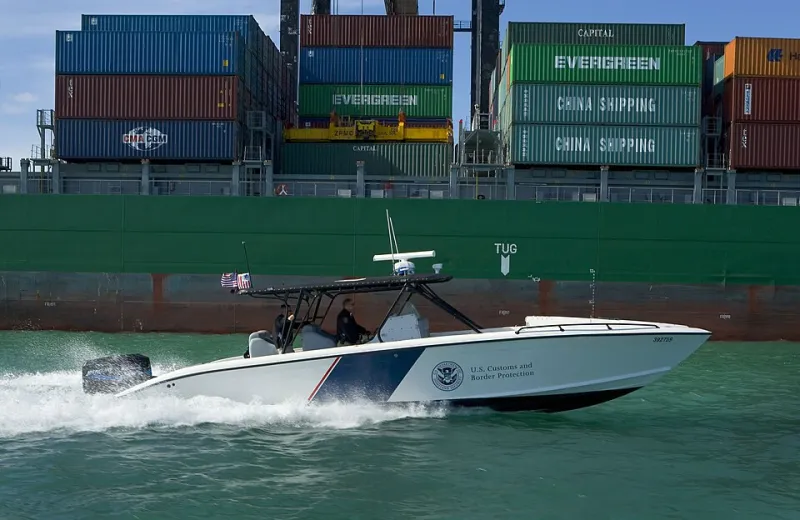
Photo: Maurizio Pesce from Milan, Italia, CC BY 2.0, via Wikimedia Commons
For decades, the dominant narrative of Chinese manufacturing was defined by anonymity. Chinese factories produced the goods; Western brands put their names on them. That arrangement is changing with remarkable speed.
A new cohort of Chinese consumer companies has emerged with a fundamentally different ambition: to own the customer relationship entirely, from factory floor to front door. Leveraging digital marketing platforms, data-driven product development, and supply chain advantages that most Western competitors cannot match, these brands are establishing meaningful footholds in the United States and European markets — often without a single brick-and-mortar retail presence.
The implications for American businesses, whether they compete with these brands or source from the same ecosystem that produces them, are significant and still unfolding.
The Architecture of a New Kind of Brand
To understand what distinguishes this generation of Chinese direct-to-consumer (DTC) companies, it helps to start with what they are not. They are not trading companies repackaging commodity products under a generic label. Nor are they established Chinese conglomerates extending legacy brands into new territories. They are, in most cases, digitally native businesses built from inception around the logic of international e-commerce.
Shein, perhaps the most widely analyzed example, built a fast-fashion operation of extraordinary scale by combining near-real-time trend analysis, an agile network of Guangzhou-based suppliers, and a social media marketing engine that generates organic reach at a fraction of traditional advertising costs. The company's ability to move from trend identification to live product listing in as few as three days represents a structural advantage that Western fast-fashion incumbents have struggled to replicate.
But Shein is one data point in a much broader trend. Anker Innovations, headquartered in Shenzhen, has built a dominant position in the US consumer electronics accessories market — portable chargers, cables, audio equipment — through a relentless focus on Amazon optimization, customer review management, and product iteration informed by direct consumer feedback. The brand is now consistently among the top-selling electronics accessory labels on Amazon in the United States, competing effectively against companies with far larger marketing budgets.
Fashion, Home Goods, and the DTC Playbook
Across product categories, a recognizable strategic template is emerging among successful Chinese DTC brands targeting Western consumers.
In fashion, brands including CIDER and Halara have followed a model similar to Shein's but with tighter niche positioning — Gen Z aesthetics and athleisure, respectively. Both have built substantial Instagram and TikTok followings in the US market, relying on influencer seeding and user-generated content rather than traditional advertising spend. Their pricing, made possible by direct factory relationships and the absence of wholesale margin requirements, consistently undercuts comparable Western alternatives.
In home goods and furniture, companies like SONGMICS and Homfa have captured significant Amazon market share in categories including shelving, storage, and organizational products. These brands invest heavily in product photography, listing optimization, and customer service responsiveness — the visible signals that build trust with American online shoppers who cannot physically evaluate merchandise before purchase.
The electronics category has arguably seen the most sophisticated brand-building. Beyond Anker, companies including Roborock (robotic vacuum cleaners), Govee (smart home lighting), and Ugreen (charging and connectivity accessories) have each developed distinct brand identities, cultivated loyal customer communities, and expanded their product lines in direct response to consumer feedback gathered through their own digital channels.
Why Western Retail Channels Are No Longer the Gateway
Traditionally, breaking into the US consumer market required either a costly retail partnership with a major chain or the distribution infrastructure to service one. Chinese brands entering the market a decade ago faced this reality as an almost insurmountable barrier.
The maturation of Amazon's third-party marketplace, combined with the rise of independent e-commerce platforms like Shopify and the advertising capabilities of Meta and TikTok, has effectively dismantled that barrier. A Chinese brand with a compelling product, competitive pricing, and a competent digital marketing team can now reach American consumers directly, test product-market fit with limited capital exposure, and scale based on real demand signals rather than retail buyer projections.
This shift has profound implications for American importers and wholesalers who have historically served as the intermediary layer between Chinese manufacturers and US consumers. In category after category, the value proposition of that intermediary role is being eroded by brands that have integrated it out of existence.
What American Retailers and Importers Should Consider
The rise of Chinese DTC brands is not simply a competitive threat to be managed — it also represents a set of signals worth interpreting carefully.
First, these companies are demonstrating what becomes possible when the distance between product development and consumer feedback is minimized. American retailers and importers who maintain long product development cycles and rely on annual buying decisions are structurally disadvantaged relative to competitors who iterate on weekly timescales.
Second, the success of brands like Anker and Roborock suggests that country-of-origin skepticism among American consumers, while real in certain categories, is not the prohibitive barrier it once was. Quality, price, and brand experience increasingly matter more than manufacturing geography to a significant segment of US shoppers.
Third, and perhaps most importantly, the supplier networks that power these Chinese DTC brands — the same Shenzhen and Guangzhou ecosystems that have long served Western companies — are demonstrating capabilities that go well beyond cost-competitive manufacturing. They are proving themselves capable of genuine product innovation, responsive customization, and brand development at international standards.
For American businesses engaged with Chinese trade, that realization cuts both ways. It represents a competitive challenge from new market entrants. It also represents an opportunity — for those willing to engage more deeply with Chinese commercial partners — to access product development and supply chain capabilities that are genuinely difficult to replicate elsewhere.
A Competitive Landscape in Transition
The global consumer market is not a zero-sum game, and the emergence of capable Chinese brands does not foreclose opportunity for American companies. But it does raise the competitive floor in meaningful ways.
US retailers and importers who treat this trend as a temporary anomaly risk being outpaced by companies — both Chinese and domestic — that are adapting their models in real time. Those who engage with it seriously, whether by strengthening their own supplier relationships, refining their digital commerce capabilities, or identifying the white spaces that Chinese DTC brands have not yet captured, are better positioned for the decade ahead.