Hidden in Plain Sight: Sourcing From Chinese Factories That Have Never Exported
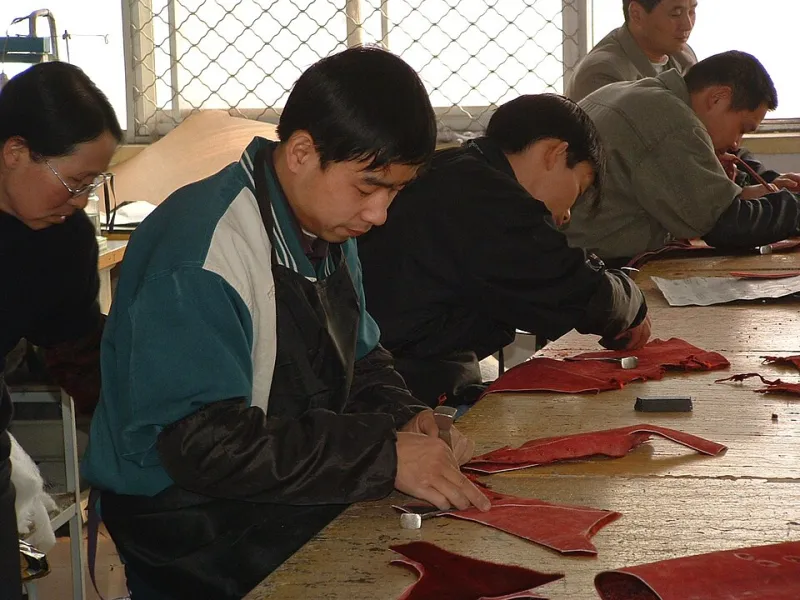
Photo: YeraC, CC BY-SA 4.0, via Wikimedia Commons
The supplier that answers your inquiry in polished English, sends a formatted catalog within the hour, and quotes FOB Shenzhen by return email is competing for your business against dozens of similar firms. The factory that builds components for two or three Chinese appliance brands, runs its own tooling shop, and has never issued an export invoice is not competing for anything — because almost no one has asked.
These domestic-facing manufacturers are not a niche curiosity. China's internal market is large enough to have incubated entire supply chains that never needed a foreign customer, and the best of them are tier-one suppliers to domestic brands with demanding quality regimes of their own.
How Domestic-Only Manufacturers Came to Exist at This Scale
Two decades of domestic consumption growth allowed manufacturers to scale without exporting. A supplier to Chinese appliance, automotive, or consumer-electronics brands could reach substantial volume serving a handful of accounts, investing continuously in automation and tooling while never building a foreign trade department. Their quality systems evolved against Chinese national standards, their packaging evolved against the requirements of domestic e-commerce platforms, and their commercial practices evolved around renminbi settlement and relationship-based account management.
This is what makes them interesting. A factory organized around a small number of large, technically demanding domestic customers often carries more engineering depth than an exporter optimized for high-mix, low-volume foreign orders.
Recognizing One Before the First Call
The signals are consistent. The website, if there is one, is Chinese-only and functions as a brochure rather than a lead-generation tool. Contact runs through WeChat rather than email. Quotations arrive in renminbi and reference domestic tax-inclusive pricing. Certifications on the wall are CCC, CQC, or GB-standard test reports rather than UL, ETL, or CE. There is no foreign trade department, and the person answering your inquiry is an account manager whose other customers are all domestic brands.
The organization may also lack a customs registration and a foreign trade operator record — both straightforward to obtain, but genuinely unfamiliar territory for a first-time exporter.
Where the Friction Actually Appears
Onboarding friction clusters in five areas, and each has a practical remedy.
Compliance documentation. A domestic supplier may hold no NRTL listing, no FDA facility registration, and no familiarity with US labeling rules covering country-of-origin marking, ingredient and warning statements, or state-level chemical disclosure requirements. Supply chain traceability documentation now expected by US customs authorities is likely to be entirely new territory.
Packaging. Domestic packaging is engineered for the trip from factory to regional warehouse, not for retail display or parcel-network handling. Expect incorrect barcode formats, missing case-pack specifications, no pallet configuration for US distribution centers, and no transit testing against recognized standards.
Quality conventions. Chinese national standards do not map neatly onto ASTM or ANSI specifications. Sampling familiarity varies. A supplier may have excellent process control and still not know what an AQL level means in your purchase order.
Commercial mechanics. Letters of credit, escrow, net terms after inspection, and FOB or DDP Incoterms may all be unfamiliar. Some will ask for full payment before shipment simply because that is how domestic accounts work.
Documentation and classification. Commercial invoices, packing lists, harmonized tariff classification, importer security filings, and certificates of origin typically require a third party to manage on the first shipments.
Why the Rough Edges Can Signal Depth
Export polish is a sales capability, not a manufacturing one. A factory that has spent fifteen years making the same component for three domestic brands has likely invested in in-house mold and die capability, dedicated assembly automation, and long-tenured process engineers. Its unit economics often look better than an exporter's because there is no trading-company layer and no export marketing overhead.
The absence of export experience is a statement about the company's customer base, not about its competence. The relevant question is whether the factory will accept the discipline of a US compliance program.
A Structured Path to a First Order
- Qualify the factory, not the catalog. Commission a third-party audit that covers capacity, process capability, and financial standing.
- Open with a paid engineering engagement. A tooling or sample-development purchase establishes a commercial relationship and reveals how the supplier handles specifications.
- Provide a written supplier manual. Regulatory requirements, testing protocols, packaging specifications, labeling rules, and documentation expectations, in both languages.
- Run a pilot batch through the full path. Import a small volume end to end and treat the first shipment as a process test rather than a revenue event.
- Place quality resources on the ground. A resident inspector or a sourcing agent for the first two production cycles is usually cheaper than the rework it prevents.
- Set documentation and non-conformance processes in the contract. Define who owns testing costs and how deviations are handled before volume begins.
The Two- to Three-Cycle Onboarding Curve
Buyers who pursue this route should budget for roughly two to three production cycles before the relationship runs smoothly. The first cycle surfaces documentation gaps, the second corrects packaging and labeling, and the third typically produces a supplier that behaves like an experienced exporter — with the underlying production capability intact.
The strategic argument is straightforward. Competition for polished, export-ready Chinese suppliers is intense, price advantages are thin, and differentiation is limited. The domestic-facing factory sits outside that competition, and for US buyers willing to invest in the transition, the reward is access to capability that was never really for sale.