Faster Factories, Slower Decisions: How Chinese Manufacturing Speed Is Quietly Disrupting US Product Cycles
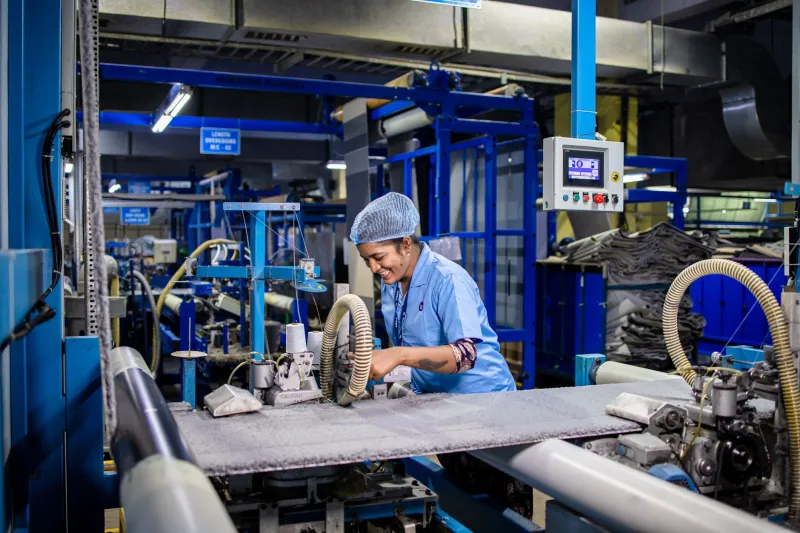
There is a particular kind of optimism that grips US procurement teams when a Chinese factory quotes a three-week lead time on a product that would take three months to build domestically. It feels like an advantage—a structural edge that competitors without Chinese supplier relationships simply cannot match. But increasingly, supply chain veterans are questioning whether the speed itself has become a liability hiding in plain sight.
The factories are not exaggerating. China's manufacturing infrastructure—dense industrial clusters, deep component ecosystems, and a workforce trained to execute rapid pivots—genuinely enables production timelines that would be operationally impossible in most other sourcing regions. The problem is not the factories. The problem is what happens upstream, on the US side of the relationship, when speed becomes the dominant organizing principle of a supply chain.
The Compression Effect on Decision-Making
When a supplier can deliver finished goods in weeks rather than months, the implicit pressure on US product teams intensifies dramatically. Design sign-offs that once had a comfortable runway now feel urgent. Marketing timelines get pulled forward. Engineering reviews get compressed. And procurement teams, eager to capitalize on the factory's capacity window, begin approving specifications before all internal stakeholders have fully aligned.
This is what supply chain consultants are increasingly calling the compression effect—a cascade of accelerated upstream decisions triggered by the downstream promise of rapid production. The irony is significant: the faster the factory, the more likely the US company is to make consequential decisions too quickly.
In practice, this often manifests as mid-cycle engineering changes. A product enters production with a specification that was approved under time pressure, only to require modification after the first production run. In Chinese manufacturing contexts, mid-cycle changes are not merely inconvenient—they can trigger renegotiated unit pricing, minimum order quantity adjustments, and tooling charges that were never budgeted. What began as a cost-saving, time-saving relationship can rapidly become an expensive correction exercise.
Inventory Strategy Under Pressure
The speed paradox extends into inventory planning with equal force. Fast turnaround capability encourages US buyers to reduce safety stock, reasoning that they can replenish quickly if demand spikes unexpectedly. This logic is sound in isolation. But it assumes that the factory's rapid production window will be available on demand—an assumption that consistently underestimates Chinese manufacturing's own capacity constraints.
During peak seasons, particularly in Q3 and Q4 when factories are managing multiple clients' holiday production simultaneously, those quoted lead times stretch considerably. US companies operating on lean inventory models calibrated to off-peak turnaround times find themselves caught without buffer stock precisely when consumer demand is highest. The speed advantage that shaped the inventory strategy disappears at the moment it is needed most.
Several mid-sized US consumer goods companies have quietly acknowledged this dynamic in recent years, rebuilding modest safety stock positions after years of progressive reduction. The carrying cost of that inventory, once viewed as an inefficiency to be eliminated, is now being reframed internally as supply chain insurance.
The Competitive Positioning Trap
There is a subtler strategic consequence that receives less attention in procurement discussions: the competitive arms race that fast Chinese manufacturing enables and then accelerates. When one US company in a product category leverages rapid Chinese production to bring new SKUs to market quickly, competitors feel compelled to match that pace. The entire category's product development cycle compresses.
This creates a market dynamic in which speed of iteration becomes a competitive differentiator, but one that is ultimately available to every player willing to source from the same manufacturing ecosystem. The result is not sustained competitive advantage for any individual company—it is a category-wide acceleration of product churn that increases complexity, raises the cost of inventory obsolescence, and shortens the commercial lifespan of any given product.
For US brands built on design quality and considered product development, this dynamic is particularly corrosive. The pressure to match competitors' release cadence, enabled by Chinese manufacturing speed, can pull companies away from the deliberate development processes that differentiated them in the first place.
Budget Integrity and the Hidden Costs
Financial teams at US companies sourcing from China are beginning to formalize what their procurement colleagues have long understood informally: the headline cost of fast manufacturing does not capture the full budget impact. A comprehensive accounting of speed-related sourcing costs typically includes expedited freight premiums when production windows don't align with standard shipping schedules, quality inspection fees for compressed production runs where factory QC processes are themselves accelerated, the cost of engineering change orders triggered by premature specification approval, and the markdown exposure on inventory that was overproduced in a rush to capitalize on a factory's available capacity.
None of these costs appear on the original purchase order. All of them erode the margin advantage that fast turnaround was supposed to deliver.
Procurement leaders who have developed mature China sourcing relationships describe a discipline that counterintuitively involves resisting the factory's speed capability. They negotiate rapid production windows as an option to be exercised selectively, not a default operating mode. They maintain internal decision-making processes that are explicitly protected from compression, even when the factory could move faster. And they treat lead time as one variable in a multi-factor sourcing equation rather than the organizing principle of the entire relationship.
Rethinking the Speed Relationship
The most strategically sophisticated US companies operating in the China sourcing environment are beginning to articulate a more nuanced framework for speed. Rather than asking how quickly a factory can produce, they are asking how quickly their own organizations can make high-quality decisions—and calibrating their supplier relationships to that internal tempo rather than the factory's external capability.
This reframing has practical implications for supplier contracts, which increasingly include provisions for production holds and delayed start dates that protect US buyers' ability to complete internal reviews without forfeiting their production slot. It has implications for inventory modeling, which is reverting toward more conservative buffer stock assumptions. And it has implications for competitive strategy, where some US brands are explicitly choosing to compete on depth of product development rather than speed of product release.
China's manufacturing speed is a genuine and remarkable capability. The factories that can compress a three-month production timeline into three weeks are not overstating their capacity—they are demonstrating an industrial infrastructure that has no peer globally. But that capability is a tool, and like any tool, its value depends entirely on the sophistication with which it is applied. For US companies still treating fast turnaround as an unconditional advantage, the real cost of speed may be the one that never appears on the invoice.